
Your Guide to Shipping Container Doors

Updated: 11 hours ago
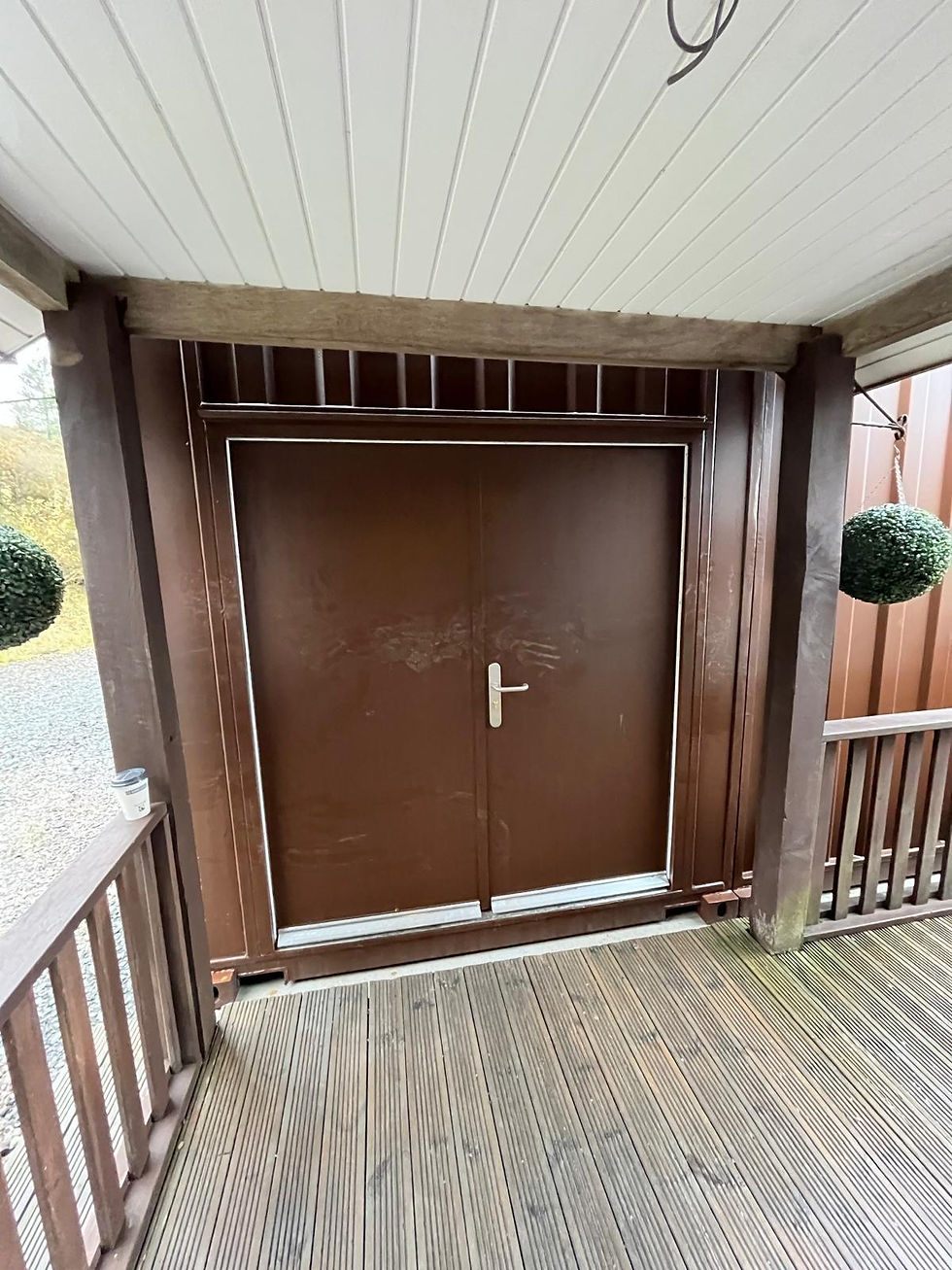
Shipping container doors are one of the most important parts of the unit. They affect security, ease of access, weather resistance and how practical the container is to use on a day-to-day basis.
For many storage applications, the standard double cargo doors fitted to a shipping container are perfectly suitable. However, there are also alternative door configurations available in the wider market that can make containers easier to use for particular applications.
Understanding how container doors work, what different options are available and how to maintain them can help you get more from your container and spot problems before they become more serious.
How do standard shipping container doors work?
Most standard shipping containers are fitted with two outward-opening steel cargo doors at one end.
Each door is typically secured using vertical locking bars. Turning the handles rotates the locking bars and engages cams at the top and bottom of the container frame, helping pull the doors tightly into position.
Rubber seals around the doors help prevent rain and wind-driven moisture entering the container when the doors are correctly closed.
The system is simple, strong and well suited to general storage, which is why standard cargo doors remain the most common option on shipping containers.
Are different shipping container door options available?
Yes. While standard cargo doors suit most storage applications, containers can be specified or modified with different door arrangements depending on how they will be used.
These alternatives are generally supplied by specialist container modification companies rather than being standard features on most storage containers.
Personnel doors, for example, can provide easier day-to-day access where people need to enter a container regularly without opening the full cargo doors.
Side-opening containers provide access along a larger section of the container wall, which can be useful when goods need to be reached from multiple positions.
Containers can also be configured with cargo doors at both ends. These are often referred to as tunnel containers and can be useful where stock or equipment needs to move through the unit rather than being accessed from one end only.
Roller shutters may be used for applications where frequent access is required, particularly where handling equipment or stock needs to move in and out quickly.
The right option depends on how often the container will be accessed, what is being stored and how the site itself is laid out.
Standard cargo doors are still the best option for many users
Alternative door configurations can be useful, but they are not necessary for every application.
For straightforward storage, standard double cargo doors offer a good combination of security, weather resistance and durability.
Their wide opening makes it relatively easy to move pallets, machinery, furniture and bulky materials into and out of the container.
They also retain the original robust construction of the container, without introducing additional openings into the side walls.
For businesses using a container mainly as secure storage rather than as a regularly occupied space, standard doors are often the simplest solution.
Why do shipping container doors become difficult to open?
Container doors can become stiff for several reasons.
One of the most common causes is the container sitting unevenly. If one corner settles into softer ground or the unit is positioned on an uneven base, the container frame can twist slightly.
Even a small amount of movement can affect the alignment of the doors and locking bars.
Corrosion, dirt and lack of lubrication can also make hinges and locking mechanisms harder to operate. Older rubber seals may create additional resistance if they have become distorted or hardened.
Damage from previous handling can also affect alignment, particularly on older used containers.
If a door suddenly becomes significantly harder to open, it is worth identifying the cause rather than simply applying more force.
Keep the container level
Correct siting is one of the simplest ways to prevent door problems. A shipping container should ideally sit on a firm, level and well-drained surface. Suitable supports beneath the corners can help distribute the weight and keep the structure square.
If the doors begin catching or require noticeably more effort to close, check whether the container has settled or shifted.
Re-levelling the unit can sometimes resolve door problems without any work being required on the doors themselves.
Maintain the hinges and locking bars
Shipping container doors are designed to be robust, but moving parts still benefit from occasional maintenance.
Check hinges, locking bars, handles and cams for dirt, corrosion or stiffness. Cleaning moving components and applying an appropriate lubricant can help keep them operating smoothly.
Pay particular attention to the hinges, as these carry the weight of the doors whenever they are opened.
If a component is badly corroded, bent or damaged, it should be repaired or replaced rather than simply lubricated.
Routine checks are particularly useful on containers that are opened frequently or kept in exposed locations.
How do you check shipping container door seals?
Door seals play an important role in helping keep a container weather resistant.
Start with a visual inspection. Look around the entire perimeter of the doors and check for splits, cracks, missing sections or areas where the rubber has pulled away from the door.
Pay particular attention to corners and the centre where the two doors meet, as these areas can experience more wear.
You should also check whether the seal is still flexible. Rubber that has become very hard, brittle or permanently flattened may no longer create an effective seal.
Close the doors and inspect whether they sit evenly against the frame. Visible gaps can indicate either a damaged seal or an alignment problem.
How can you tell if a container door seal is leaking?
Water inside a container does not always mean the door seal has failed.
Condensation can create moisture on internal walls and ceilings, particularly when temperatures change quickly.
A leaking door seal is more likely to produce localised moisture close to the doors, particularly after rain.
Inspect the inside of the container after wet weather and look for damp patches, water tracks or signs that moisture is entering around a specific section of the door.
If you can see daylight around part of a closed door, that is another indication that either the seal or the door alignment needs attention.
When should shipping container door seals be replaced?
Door seals should be considered for replacement when they are badly cracked, torn, missing or too compressed to create an effective seal.
Minor surface ageing does not necessarily mean the seal has failed, particularly if the container remains dry.
The important question is whether the seal continues to make consistent contact with the frame when the doors are closed.
If replacing a seal, make sure the problem is actually the rubber itself. Installing a new seal will not solve a door that is out of alignment because the container is twisted or the hinges are damaged.
Correct diagnosis helps avoid unnecessary replacement work.
Check the bottom of the doors carefully
The lower sections of container doors can experience more exposure to moisture, dirt and standing water than other areas.
Inspect the bottom edges of the doors, lower locking gear and door frame for corrosion.
Keeping drainage around the container clear can help reduce prolonged moisture exposure.
If vegetation grows directly against the container, keep it trimmed back so the doors and lower frame remain visible and accessible for inspection.
Do damaged doors mean the container needs replacing?
Not necessarily.
Many shipping container door problems can be repaired. Hinges, locking gear, handles and seals are all components that can potentially be replaced.
The decision will depend on the extent of the damage and the overall condition of the container.
If the door frame itself is badly distorted, extensively corroded or no longer secure, repairs can become more substantial.
For an older container with multiple structural issues, replacement may eventually become more economical than repeated repairs.
Security is another reason to maintain container doors
Container doors do more than keep the weather out. They are also central to the security of the unit.
Check that locking bars engage correctly and that handles cannot be easily manipulated when locked.
Many storage containers also use a lockbox, which helps protect a padlock by surrounding it with steel and reducing access for cutting tools.
Even strong security equipment will be less effective if the underlying doors or locking mechanisms are badly damaged, so general maintenance remains important.
What should you check when buying a used container?
Door operation should be part of any inspection of a used shipping container.
Open and close both doors and check how much effort is required. Inspect the locking bars, hinges, handles, door frame and rubber seals.
Make sure the doors meet correctly and that the locking mechanisms engage securely.
Some stiffness can be normal on an older container, particularly if it has not been opened recently, but significant resistance may indicate alignment or maintenance issues.
Also inspect the inside around the doors for signs of previous water ingress.
Think about how you will use the container before choosing the door arrangement
The right door arrangement depends on the intended application.
If you are using the container primarily for long-term storage, standard cargo doors may be all you need.
If the container will be accessed frequently by staff, smaller personnel doors may be more convenient. Side-opening designs can make it easier to reach stock stored along the full length of the unit, while double-ended containers can improve access where goods need to enter from either side.
These specialist options are available in the wider container market, but they should be chosen based on a genuine operational need rather than simply because more doors seem more convenient.
Every additional opening can affect cost, security and weather protection, so it is worth considering the practical benefits carefully.
Look after the doors and they should last for years
Shipping container doors are designed for demanding use and can remain reliable for a long time when properly maintained.
Keeping the container level, lubricating moving components, checking seals and dealing with corrosion early can prevent many common door problems.
If you are buying a used container, paying particular attention to door alignment, locking gear and seals can also provide a useful indication of how well the unit has been maintained.
TEU supplies shipping containers for businesses and individuals across the North West. If you need help choosing a container for secure storage, our team can advise on available sizes, condition and delivery requirements.


Comments