
Do You Need Planning Permission for a Shipping Container on a Business Site?

Updated: 10 hours ago
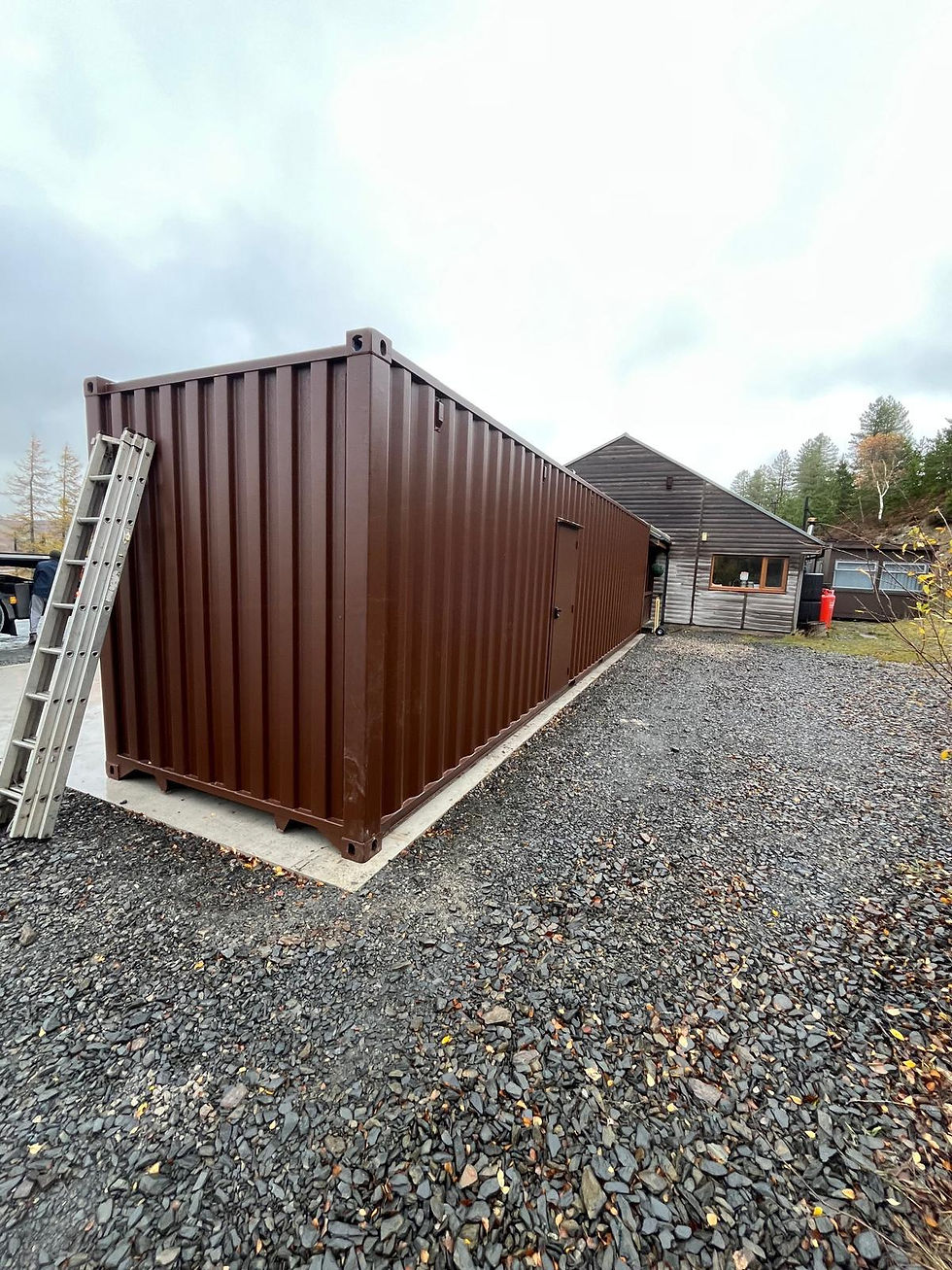
Adding a shipping container can be a straightforward way for a business to create additional secure storage without taking on more warehouse space. But before arranging delivery, there is an important question to answer: do you need planning permission to put a shipping container on a business site?
In England, the answer is not automatically yes or no.
Whether planning permission is required depends on factors including how the container will be used, how long it will remain on site, the existing use of the land and whether the proposal qualifies as permitted development.
A container being moveable does not automatically mean that it falls outside the planning system. If you are planning to install one at commercial premises, it is worth checking the position before ordering the container or preparing the site.
Can a shipping container require planning permission?
Yes. Placing a shipping container on land can potentially constitute "development" for planning purposes.
Government planning guidance explains that development includes building operations and material changes in the use of land or buildings. Whether a particular container amounts to development therefore depends on the circumstances rather than simply on the fact that it can theoretically be moved.
Planning decisions have considered factors such as the size of a structure, how permanent it is and how physically attached it is to the land when deciding whether something should be treated as a building.
A container that is delivered temporarily for a specific short-term purpose can therefore be treated differently from one positioned permanently in a business yard and used for storage year after year.
Does it matter that shipping containers are moveable?
Being moveable is relevant, but it is not necessarily decisive.
A shipping container does not need traditional foundations and can normally be lifted onto a vehicle and relocated. However, planning law looks at the actual nature and circumstances of the development.
A large container that remains in one position for a prolonged period and forms an established part of a site's operations may be viewed differently from equipment that regularly moves around the premises.
This is why businesses should not assume that simply describing a container as "temporary" means planning permission cannot be required.
The existing use of the business site is important
How the land is already being used can make a major difference.
For example, placing a storage container within an established industrial or warehousing site may be easier from a planning perspective than introducing commercial storage onto land that is not currently used for that purpose.
Government guidance distinguishes between physical development and changes of use. Even where the existing use of a site already allows storage, the physical siting of a container may still need to be considered separately. Conversely, placing containers on land for a completely new storage operation could potentially involve both physical development and a material change of use.
This is particularly relevant if containers are being installed as part of a commercial self-storage operation rather than simply providing ancillary storage for the business already occupying the site.
What if the container is only being used for additional business storage?
Using a container to store equipment, stock, tools or materials associated with the existing business may make the proposal relatively straightforward, but this does not automatically remove the need for planning permission.
The local planning authority may consider where the container will be positioned, its size, visibility and relationship with neighbouring properties. The existing planning permission for the premises and any conditions attached to it can also affect what is allowed.
For example, a container positioned discreetly within a large industrial yard may create very different planning considerations from the same container positioned prominently beside a road or close to residential properties.
Before ordering a container, check any existing planning conditions affecting the site as well as its established use.
Some industrial and warehouse sites have permitted development rights
Businesses occupying qualifying industrial buildings or warehouses may have permitted development rights allowing certain new buildings within the existing curtilage without making a full planning application.
These rights are subject to detailed restrictions covering matters such as floor area, height, proximity to boundaries and the amount of existing development on the site. Development must also relate to the existing industrial or warehouse use, and restrictions apply in certain locations and circumstances.
Whether a particular shipping container can benefit from these rights will depend on the nature of the site and proposal.
Permitted development rights can also have been removed by a planning condition or an Article 4 Direction, so the national rules should not be viewed in isolation. The Planning Portal recommends checking with the local planning authority where there is any uncertainty.
What about containers used temporarily during building work?
There are specific permitted development rights covering some temporary buildings and structures needed while other operations, such as construction, are being carried out.
Part 4 Class A of the General Permitted Development Order allows temporary buildings, moveable structures, plant and similar equipment where they are required temporarily in connection with operations taking place on the same or adjoining land. The temporary development must be removed when those operations are completed.
This can be relevant to containers used temporarily on construction projects.
However, it should not be interpreted as a general exemption for any container that a business intends to remove eventually. The container needs to fall within the conditions of the permitted development right.
A container being used for ordinary long-term business storage is therefore different from one that is genuinely required for the duration of a specific construction project.
Does the size of the shipping container matter?
It can. A standard 10ft, 20ft or 40ft shipping container occupies a significant amount of space, and its dimensions can influence whether particular permitted development limits are met.
A 40ft container will naturally have a greater visual and spatial impact than a 10ft unit. Multiple containers, and particularly stacked containers, can create further planning considerations.
If your business expects to need several units, it is sensible to consider the complete proposed storage arrangement at the outset rather than adding containers individually without reviewing the planning implications.
Location within the site can make a difference
Where the container is positioned can be just as important as the container itself.
Local planning authorities may consider the effect of development on the appearance of the area, neighbouring properties, access, parking and vehicle movements.
A container should also be positioned where delivery and collection vehicles can operate safely without creating unnecessary obstruction.
Businesses considering a container close to the site boundary should be particularly careful, because proximity to boundaries can affect whether certain permitted development rights apply. For industrial buildings and warehouses, national permitted development rules include specific restrictions on development close to the curtilage boundary.
Planning and practical delivery requirements should therefore be considered together when choosing where the container will sit.
What if you want to operate a container self-storage business?
This is different from simply placing one container at your existing premises to hold your own stock or equipment.
Introducing a commercial storage operation onto a site can amount to a material change in how the land is being used. Government planning guidance states that whether a change is "material" is a matter of fact and degree and must be considered on the individual circumstances of the case.
Factors such as customer visits, vehicle movements, the number of containers and operating hours could all become relevant.
If you intend to establish a container storage yard rather than simply create ancillary storage for an existing business, obtaining specific planning advice before committing to the site is particularly important.
How can you check whether planning permission is required?
The safest approach is to contact the local planning authority responsible for the site before installation if there is any uncertainty.
You can provide details of the container size, proposed location, intended use and how long it is expected to remain there. Photographs or a simple site plan can make it easier for the authority to understand what is proposed.
Where you want greater certainty that a proposal is lawful without planning permission, it is possible to apply for a Lawful Development Certificate. Government guidance explains that a certificate can confirm whether proposed operations or a proposed use would be lawful for planning purposes.
This can be particularly useful where a business is making a significant investment and wants formal confirmation rather than relying on an informal assumption.
Don't forget existing planning conditions
Even where national permitted development rights appear to apply, previous planning decisions affecting your premises may contain restrictions.
A planning condition might control outside storage, require particular areas to remain available for parking or restrict how parts of a site can be used.
Permitted development rights can also be removed in certain circumstances. This is why two apparently similar business premises can have different planning requirements.
Checking the planning history of the site before arranging installation can prevent problems later.
Planning permission is only one part of choosing a suitable site
Even where planning permission is not required, the proposed location still needs to work practically.
A shipping container should normally be placed on firm, level and well-drained ground. There also needs to be enough room for the delivery vehicle to reach the site and safely position the container.
Overhead cables, gates, walls, parked vehicles, soft ground and restricted turning space can all affect delivery.
Discussing site access with your container provider before delivery can help identify these problems early.
Check before installing a container on your business premises
Shipping containers can provide convenient, secure storage for businesses, but planning requirements should be checked as part of the preparation process rather than after the container arrives.
Planning permission may be required depending on the nature of the site, the intended use, how the container is positioned and how permanent the arrangement will be. Some industrial and warehouse premises may benefit from permitted development rights, while containers genuinely required temporarily for construction work can fall under separate provisions.
Because every site is different, contact your local planning authority if you are unsure. This guide relates to planning rules in England; businesses in Wales, Scotland and Northern Ireland should check the rules applying in their respective planning systems.
Once you have established that your proposed location is suitable, TEU can help you choose the right size and type of container and advise on the practical requirements for delivery and siting.


Comments